SMU – PHIL 3379 – ENVIRONMENTAL ETHICS – FALL 2025 – JEAN KAZEZ

Search This Blog

Showing posts with label Palmer. Show all posts

Wednesday, January 29, 2025

MODULE 1: Animals (continued)

 AGENDA

  1. Reporting meetings
  2. Palmer's view
_________________________


Summary of ideas in first part of Clare Palmer's article


_________________________

Palmer's View "Animal Ethics"  (annotated)

Our conflicting attitudes

Attitudes toward wildebeest (it's plural!) crossing the Mara river.    


Attitudes towards pets in a natural disaster.   Hurricanes, fires.

NBC news


_________________________

Palmer asks: is it justifiable  to have these very different attitudes? Does it make sense?

Utilitarianism

Palmer's proposal
  1. General obligations (to all sentient animals) 
    • based on their nature, they do have moral status
    • examples: shouldn't harm gratuitously, shouldn't kill for no good reason
    1. Special obligations (just to specific animals)
      • based on history, context, relationships
        • you took responsibility for an animal
        • you are responsible for an animal's problems
      • protecting, assisting, saving...are special obligations
      • two animals can have the same moral status, yet we can have different obligations to protect, assist, save

    _________________________

    Applications of Palmer's view:

    Assisting wildebeest crossing Mara river (choose one)


    1. Obligatory
    2. Merely permissible (not obligatory, not wrong)
    3. Wrong

    Assisting pets harmed by the California fires (choose one)


    1. Obligatory
    2. Merely permissible (not obligatory, not wrong)
    3. Wrong

    Killing Marius


    _________________________

    Next part of Palmer's argument

    So far it looks like she's saying we have have limited obligations to wild animals
    1. Wild animals and their problems are not our responsibility, so we don't have to help with....
      • predation
      • infant mortality
      • natural disasters
      • accidents
    2. BUT, due to anthropogenic (human-caused) problems for animals, of their problems ARE our responsibility

    Palmer's main example: Climate change 

    human behavior --> hotter, drier climate --> more wildfires --> wild animals injured by wildfires
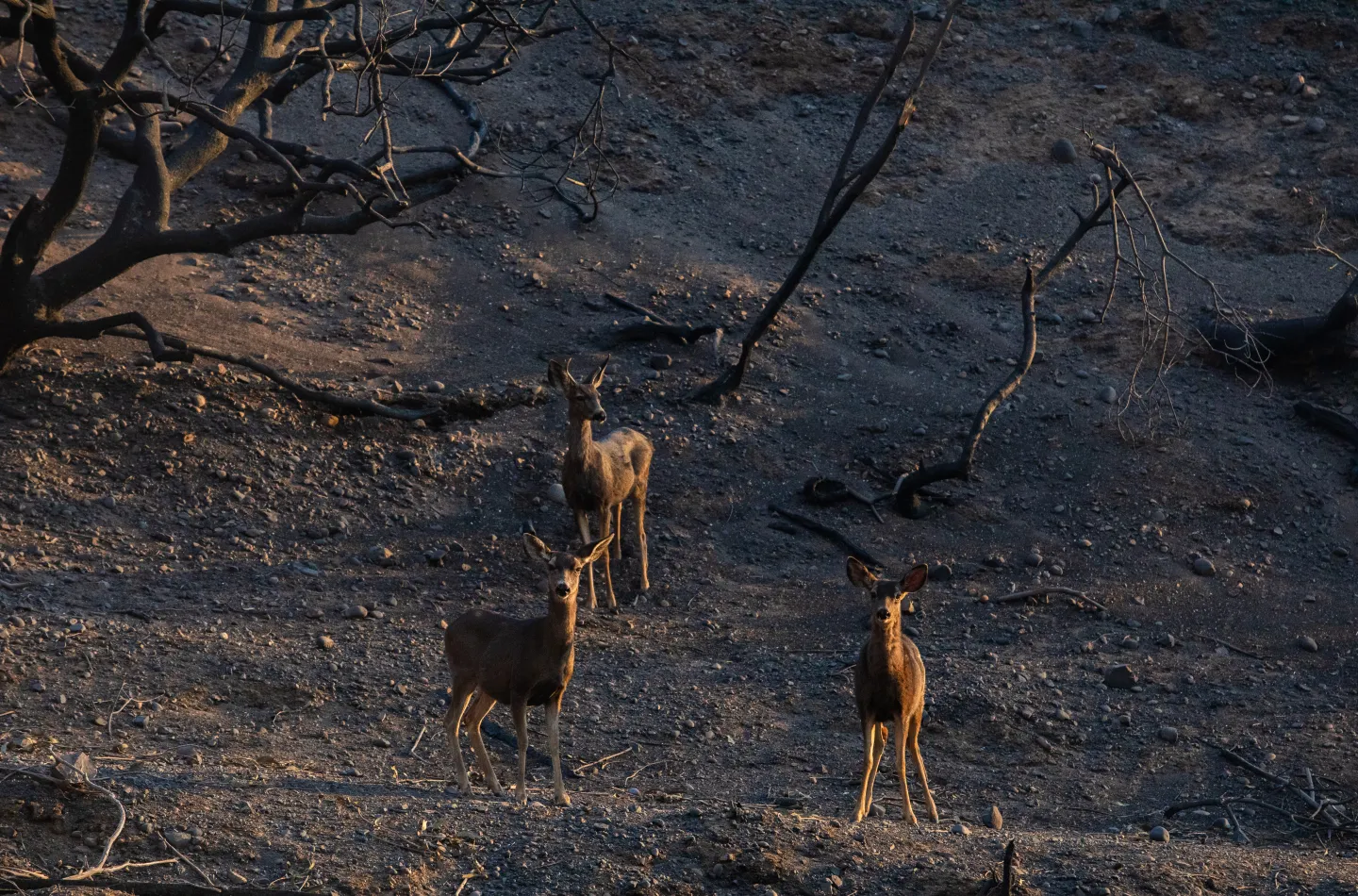
     

    how the LA wildfires are affecting wildlife and pets

    human behavior -->  warmer weather in arctic --> less sea ice --> problems for polar bears, seals, walruses 


    Monday, January 27, 2025

    MODULE 1: Animals

    Agenda this week

    1. Monday: moral status of animals + discuss reports
    2. Wednesday: moral status of animals + discuss reports
    3. Friday: moral status of plants
    _________________________

    Reports
    _________________________

    MODULE 1: When making environmental decisions, what has moral status?

    View (1) Anthropocentrism (Baxter)
    just people have moral status; we should be concerned with other beings only to the extent that they affect or matter to people

    View (2) "Animals matter too" -- they have moral status as individuals
    • not just as specimens of species
    • not just as contributors to ecosystems
    • we have obligations to individual animals
    • they have value as individuals
    • at least some animals
    Environmental questions involving animals
    1. New drilling in the Arctic National Wildlife Refuge--does the impact on caribou matter (directly)
    2. Wind turbines--does the impact on birds matter (directly)?
    3. Culling buffalos in Yellowstone--does the death of each buffalo matter (directly)?
    4. Using pesticides like DDT -- does harm to penguins, fish, even mosquitos matter (directly)?
    POLL -- is your gut feeling yes or no?

    _________________________

    Clare Palmer, "Animal Ethics"  (annotated)

    The Marius question -- a puzzle about painless killing

    Warning: pretty gruesome


    Two very different defenses
    1. Animals don't matter as individuals, but only as species, and the zoo is protecting the species
    2. Captive animals are better off being able to breed, even if the surplus has to be killed
    _________________________

    Animals DO matter as individuals --  why? which?

    Utilitarianism (Peter Singer)
    • utilitarians think the prime ethical directive is: maximize total happiness
    • who has moral status? all sentient beings
    • sentience = the capacity for pain, pleasure, and other positive and negative experiences
    • other capacities may matter but only indirectly 
    • must do cost-benefit analysis
    • The Marius question -- if it's painless killing is it OK?
    • The environmental questions
    Rights view (Tom Regan)
    • all beings who are "subjects of a life" have basic rights--right to life, right to liberty, right not to be tortured
    • doesn't matter if they're less intelligent (so are babies)
    • no need for cost-benefit analysis
    • Apply to Marius
    Hierarchical view (Gary Varner) 
    • persons (us), near persons (higher animals), merely sentient
    • they all have moral status (doesn't come in degrees)\
    • But they have varying degrees of moral significance
    • We owe more to higher animals
    • Apply to Marius
    Humane traditionalism (not discussed by Palmer)
    • No animal has anything like human moral status
    • But we have certain obligations to animals (if sentient)
    • No pointless killing, no torture
    • Thoughts about Marius?
    _________________________

    Context view (Clare Palmer)--next time