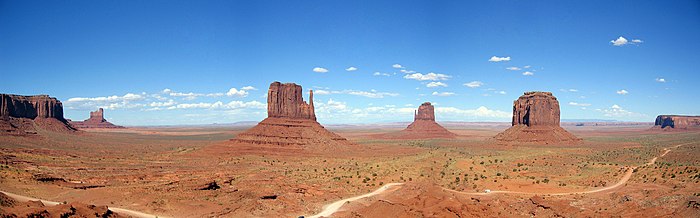
AGENDA
- Recap of threats to wilderness/wildlife
- Preview: solutions (3 Rs)
- Restoration (today, next week)
- Returning to indigenous people (Friday + Debate Monday)
- Rewilding (next week)
Threats to wilderness (Land use)

Is the loss of wild nature bad?

_________________________
Robert Eliott, "Faking Nature" (1997, Australia)
Main idea
The restoration thesis: environmental destruction can be "compensated by the later creation (recreation) of something of equal value" (Elliot, p. 81).He rejects the restoration thesis: "There is a dimension of value attaching to the natural environment which cannot be restored no matter how technologically proficient environmental engineers become" (p. 81)
_________________________
Restoration examples
Elliot's own examples
- Dune example (p. 81)
- Moving a creek to accommodate a highway (p. 82)
More land restoration examples
- Restoring land after mining--Alaska
- Restoring rainforest in Brazil
- Restoring blackland prairie in North Texas
- Restoring wolves in Yellowstone (next week)
- Restoring eagles in the US (urban ecology, later)
- Restoring the dire wolf
- Restoring buffalo--
- at the brink of extinction at the end of the 19th century
- preserved by breeders and in zoos
- conservation movement decides to create herds
- buffalo from the Bronx zoo sent to Wichita wildlife refuge in Oklahoma
- contrast with buffalo herd at Yellowstone (not restored but highly managed)

_________________________
His point: restoration can't fully restore. Why not?
- Restoration can be an intrinsic failure--some of the features and functions are lost (NOT HIS POINT!)
- When restoration is intrinsically successful, there's still loss of value
- because of change of origins: an "object's origins do affect its value and our valuations of it" (p. 85)
- Example: real Vermeer painting vs. fake Vermeer (p. 85)
- Fake nature -- lacks natural, wild origins--p. 86

- Our xperience of nature can be enhanced by beliefs about origins--p. 86
- What if I don't know? -- p. 88


"Of course I can be deceived into thinking that a piece of landscape has that kind of history, has developed in the appropriate way. The success of the deception does not elevate the restored landscape to the level of the original, no more than the success of the deception in the previous example confers on the fake the value of a real Vermeer." (p. 88)
_________________________He's not saying ...
- Not saying wild nature is the only thing we value--we may also admire aspects of a city or even a dam--p. 86 -- Dallas Arboretum -- trollstigen
- Not saying "natural is better" in all cases (diseases, etc.)--p. 87
- Not saying we should never alter nature
- Not saying we shouldn't restore...we should just realize we can't fully restore
_________________________
Two objections he tries to defeat
- "Art is different" objection: We care about the origins of an artwork because we judge that it's exceptionally high quality, but nature isn't judged in this way, so the case of art fails to establish the importance of origins for nature (p. 90)
- Preservation objection: Many natural places are preserved, and preservations alters their origins, so the effort to hold onto wild nature is doomed to failure. (p. 87)